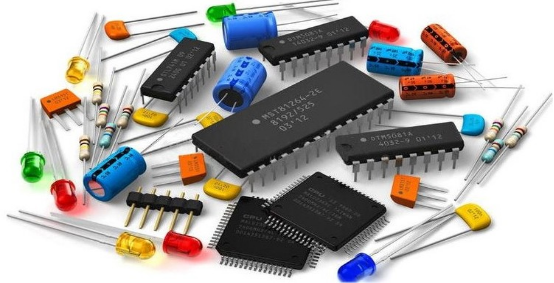
This course introduces the fundamental electronic components and circuits that form the basis of modern electronic systems. Students will study the operating principles, characteristics, and practical applications of diodes, transistors, and operational amplifiers (Op-Amps). The course also covers analog-to-digital converters (ADCs) and digital-to-analog converters (DACs), which serve as essential interfaces between analog and digital systems. In addition, students will learn about multivibrator circuits and their use in timing, pulse generation, and switching applications.
Through theoretical analysis and practical examples, students will develop the skills required to understand, analyze, and design basic electronic circuits used in communication, control, instrumentation, and embedded systems.
Learning Outcomes
By the end of this course, students will be able to:
- Explain the operating principles and characteristics of diodes, transistors, and operational amplifiers.
- Analyze and design basic electronic circuits involving semiconductor devices.
- Understand the functionality and applications of ADC and DAC systems.
- Analyze astable, monostable, and bistable multivibrator circuits.
- Apply electronic circuit analysis techniques to solve practical engineering problems.